Quick answer
Commercial epoxy flooring typically costs about $5–$12 per square foot installed. Heavy-duty industrial, chemical-resistant or food-grade systems (like urethane cement) and after-hours installs can run $12–$20+ per square foot. Slab prep, system thickness and exposure to chemicals drive the price.
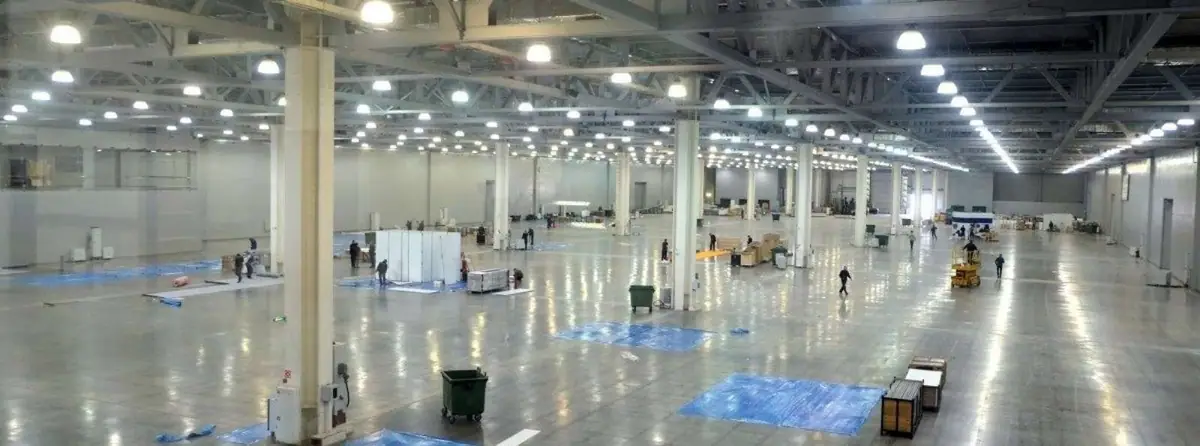
For a facility manager or business owner, flooring is an operating decision. The right coating protects the slab, keeps the space clean and safe, and looks professional for years. This guide breaks down commercial and industrial epoxy flooring cost per square foot and what moves the number.
Typical commercial epoxy cost ranges
| Facility type | Typical system | Approx. installed cost / sq ft |
|---|---|---|
| Retail, showroom, office | Decorative epoxy or flake, clear topcoat | $5 – $10 |
| Warehouse / distribution | High-build epoxy, safety striping | $6 – $12 |
| Auto service / dealership shop | Chemical-resistant epoxy + urethane topcoat | $7 – $14 |
| Manufacturing / heavy industrial | Thick-mil epoxy or slurry systems | $8 – $16 |
| Food & beverage processing | Urethane cement, coved base | $10 – $20+ |
| Healthcare & labs | Seamless, cleanable, chemical-resistant | $8 – $15 |
These are typical market ranges from industry cost data. Larger floors usually price lower per square foot; small, complex spaces price higher.
What drives commercial epoxy pricing
Slab condition and prep
Commercial slabs often have old coatings, adhesives, oil saturation, joint damage and cracks. Removing them by diamond grinding or shot blasting and repairing joints is labor-intensive — and it’s the foundation of a floor that won’t delaminate under forklifts.
System thickness (mils)
Residential coatings are typically 10–20 mils. Commercial and industrial systems commonly run 20–60+ mils, and heavy-duty mortar or urethane-cement systems go far thicker. More material and more coats mean more cost — and a lot more impact and abrasion resistance.
Chemical, thermal and moisture exposure
Battery acid in a charging area, brake fluid in a service bay, hot-water washdowns in a kitchen — each calls for a different chemistry. Chemical-resistant novolac epoxies and urethane cement cost more than standard epoxy but survive conditions that would destroy it.
Safety features
- Anti-slip aggregate in wet or sloped areas.
- Safety striping and markings for aisles, pedestrian walkways and hazard zones.
- Coved base (coating run up the wall) for sanitary washdown areas.
Scheduling
Night, weekend or phased work keeps your business open but typically adds a labor premium. Fast-cure products can reduce downtime.
Where commercial epoxy pays for itself
- Cleaner, brighter facilities. Light-reflective floors can improve visibility in warehouses.
- Lower maintenance. Seamless surfaces don’t absorb oil or harbor dust like bare concrete.
- Longer slab life. The coating protects concrete from abrasion and chemicals.
- Safety and organization. Marked lanes and slip-resistant zones support safer operations.
Weighing epoxy against polished concrete for a warehouse? Read epoxy vs. polished concrete.
Get a quote for your facility
DuraCore Industrial installs commercial and industrial epoxy flooring for warehouses, manufacturing plants, automotive facilities, retail and healthcare spaces throughout Chicagoland. We’ll walk the space, assess the slab, and give you a written scope and schedule that works around your operations.
Frequently Asked Questions
How much does commercial epoxy flooring cost per square foot?
Most professionally installed commercial epoxy floors run roughly $5–$12 per square foot. Heavy-duty industrial systems, chemical-resistant builds, urethane cement and after-hours installs can reach $12–$20+ per square foot.
How long does a commercial epoxy installation take?
Many commercial projects are completed in 1–3 days, with larger facilities phased by area or done on nights and weekends to keep the business running.
Can you install epoxy without shutting down my facility?
Usually. Projects can be phased zone by zone or scheduled after hours, and fast-cure materials can shorten return-to-service time. Night and weekend work typically adds to labor cost.
Is epoxy flooring slip resistant for employees?
It can be. Aggregate can be broadcast into the coating to add texture, and safety striping can mark aisles, walkways and work zones.