Quick answer
Epoxy is better where a warehouse needs chemical and spill resistance, slip resistance, safety striping or color-coded zones. Polished concrete suits large, dry storage areas where low upfront cost and low maintenance matter most. Many facilities use epoxy in high-risk zones and polished concrete elsewhere.
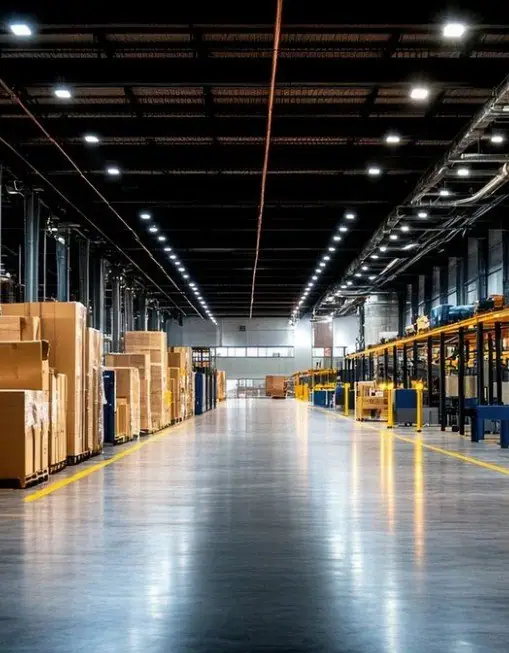
If you manage a warehouse, distribution center or manufacturing plant in Chicagoland, you’ve probably weighed two options for the slab: an epoxy coating or polished concrete. Both are durable. Both look far better than bare, dusty concrete. But they solve different problems.
How each one works
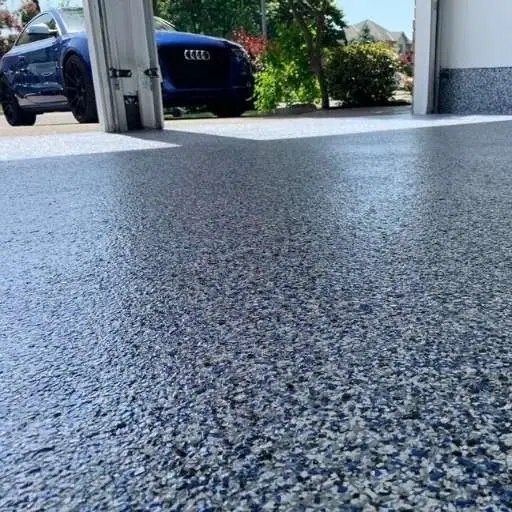
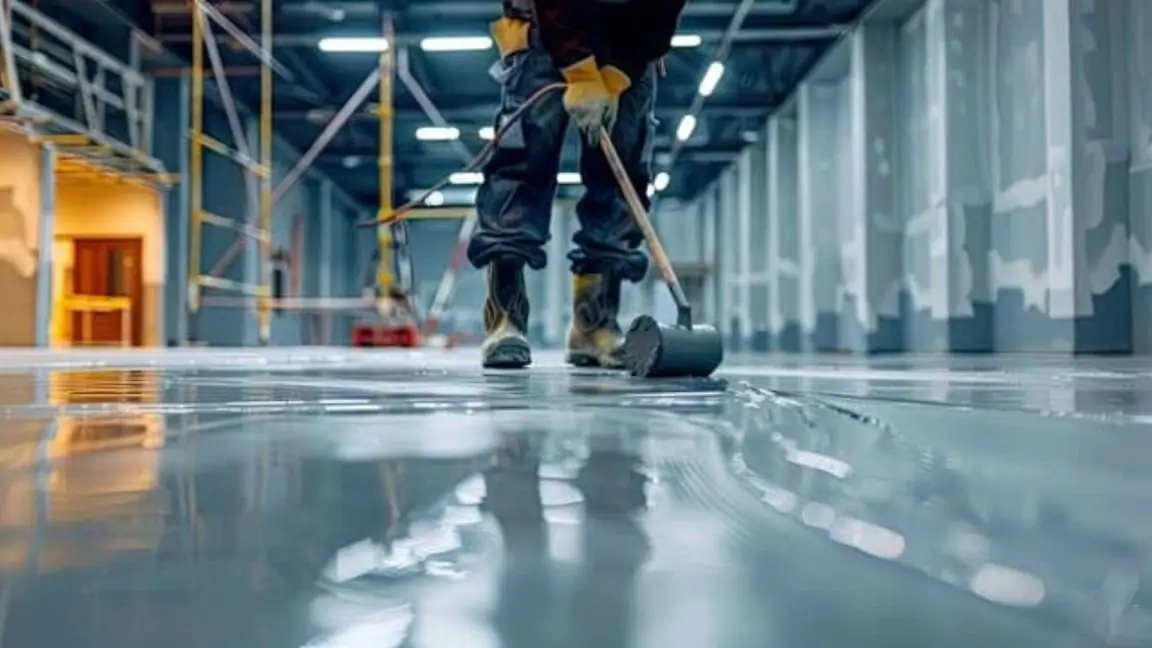
Epoxy is a resin coating bonded to the ground concrete surface, building a seamless protective layer in a color of your choice — often with safety striping, anti-slip texture and a chemical-resistant topcoat.
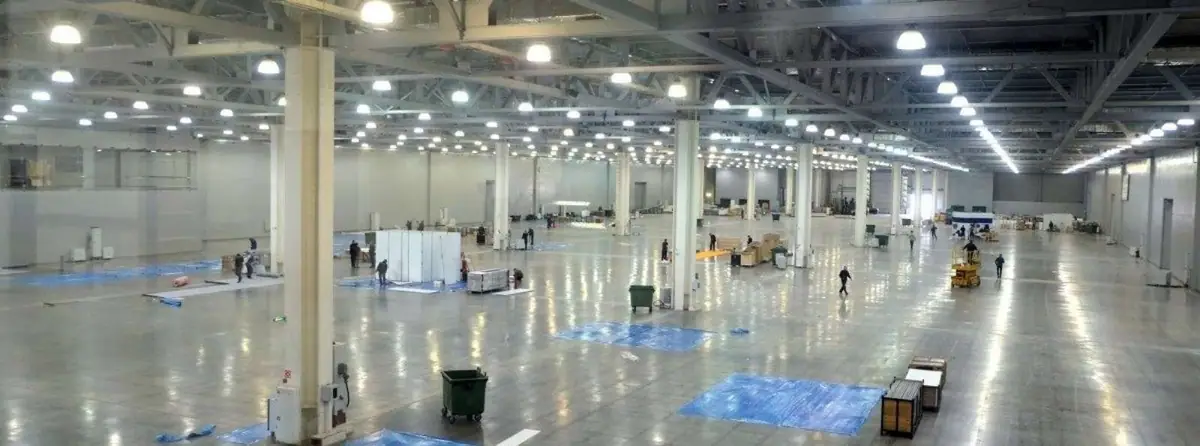
Polished concrete isn’t a coating at all. The slab itself is ground with progressively finer diamonds and treated with a densifier, producing a hard, glossy surface.
Side-by-side
| Epoxy coating | Polished concrete | |
|---|---|---|
| Chemical & oil resistance | Excellent (sealed surface) | Moderate — can stain |
| Forklift & impact durability | Excellent with industrial-thickness systems | Excellent — it’s the slab itself |
| Slip resistance when wet | Can add anti-slip aggregate | Can be slippery when wet |
| Safety striping & color zones | Built in | Requires separate paint/tape |
| Light reflectivity | High (especially light grays/whites) | Moderate to high |
| Hides slab defects | Yes — fills and covers | No — defects stay visible |
| Dust-proofing | Yes | Yes |
| Maintenance | Sweep, mop; periodic topcoat in heavy lanes | Sweep, auto-scrub; periodic re-burnish |
| Upfront cost | Moderate to higher | Lower to moderate |
When epoxy is the better choice
- Spills and chemicals: battery charging stations, maintenance shops, chemical storage, food processing.
- Wet areas: loading docks, washdown zones and anywhere slip resistance matters.
- Safety and organization: color-coded zones, pedestrian walkways and forklift lanes built into the floor.
- Damaged slabs: epoxy systems can resurface pitting and repairs that polishing would only expose.
- Clean, bright appearance: customer-facing warehouses, showrooms and service departments.
When polished concrete makes sense
- Large, dry storage areas with racking and little chemical exposure.
- Facilities that prioritize the lowest long-term maintenance on sound, high-quality slabs.
- Budgets that can’t support a full coating across a very large footprint.
The hybrid approach
Many facilities combine the two: epoxy in forklift lanes, charging areas, docks, shops and wet zones, and polished or sealed concrete in dry racking areas. It puts the protection where it’s needed and keeps cost in check elsewhere.
Questions to ask before you decide
- What chemicals, oils or liquids hit the floor, and how often?
- What’s the wheel type and load of your forklifts and pallet jacks?
- Do you need marked aisles, walkways or hazard zones?
- What condition is the slab in now?
- How much downtime can you schedule, and can work be phased?
Talk to a contractor who installs both approaches
DuraCore Industrial designs commercial and industrial floor systems around how your facility actually runs. For budgeting, see our commercial epoxy cost per square foot guide.
Frequently Asked Questions
Is epoxy or polished concrete better for a warehouse?
It depends on the zone. Epoxy is better where you need chemical and spill resistance, safety striping, color-coded areas or slip-resistant texture. Polished concrete suits large, dry storage areas where low maintenance and low upfront cost matter most. Many facilities use both.
Can epoxy handle forklift traffic?
Yes, when it’s an industrial-grade system at the right thickness over properly prepared concrete. Thin coatings over poorly prepped slabs are what fail under forklifts.
Is polished concrete slippery?
Dry polished concrete has good traction, but it can become slippery when wet or oily. Epoxy can be installed with anti-slip aggregate for wet or oily areas.