Quick answer
A professionally installed epoxy garage floor in Chicagoland typically costs about $4–$9 per square foot — roughly $1,800–$4,500 for a standard two-car garage. Price depends mostly on slab condition and repairs, the system (solid, flake or metallic) and the topcoat. Very low quotes usually skip diamond grinding, thickness or the topcoat.
If you’re pricing out an epoxy garage floor in Chicago or the suburbs, you’ve probably noticed that quotes are all over the map. One company says $1,500; another says $5,000 for the same garage. Both can be honest — they’re just quoting very different floors.
This guide breaks down what a professionally installed epoxy garage floor typically costs in Chicagoland, what you’re actually paying for, and how to compare quotes so you get a floor that lasts.
Typical epoxy garage floor cost in Chicagoland
Here are realistic ranges for a professionally installed, multi-coat system (grind, repair, base coat, decorative flake or color, and a clear topcoat). Treat them as a starting point — your slab’s condition matters more than anything else.
| Garage size | Approx. square feet | Typical installed price |
|---|---|---|
| 1-car garage | 200–300 sq ft | $1,000 – $2,700 |
| 2-car garage | 400–500 sq ft | $1,800 – $4,500 |
| 3-car garage | 600–800 sq ft | $2,700 – $7,000 |
On a per-square-foot basis, most residential garage coatings fall between about $4 and $9 per square foot. Published cost data for Chicago puts a typical epoxy garage floor at roughly $1,700–$2,800, and city projects tend to run a little higher than the outer suburbs because of labor costs and the extra prep our winters demand.
Rule of thumb: If a quote is far below $4 per square foot for a full flake system, something is being left out — usually the grinding, the thickness, or the topcoat.
What actually drives the price
1. Concrete condition and surface prep
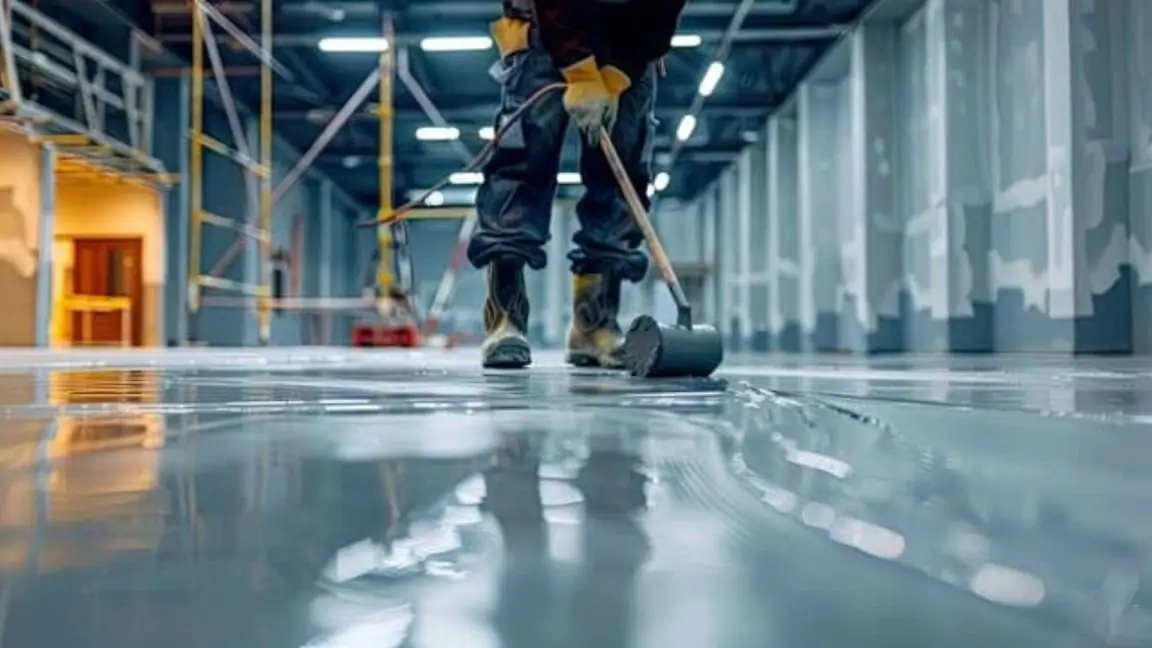
Prep is the single biggest factor in both price and longevity. A proper install starts with diamond grinding the slab to open the pores of the concrete so the coating can bond mechanically. Then cracks, spalling and pitting are filled and ground flat.
Chicagoland garages often show salt damage — flaking, pitting and “popped” aggregate near the garage door where slushy tires sit all winter. Repairing that adds material and labor, but skipping it means the coating will telegraph every defect and fail early. (More on that in our guide to how road salt damages garage floors.)
2. The coating system you choose
- Solid-color epoxy — the most affordable option; clean, uniform look.
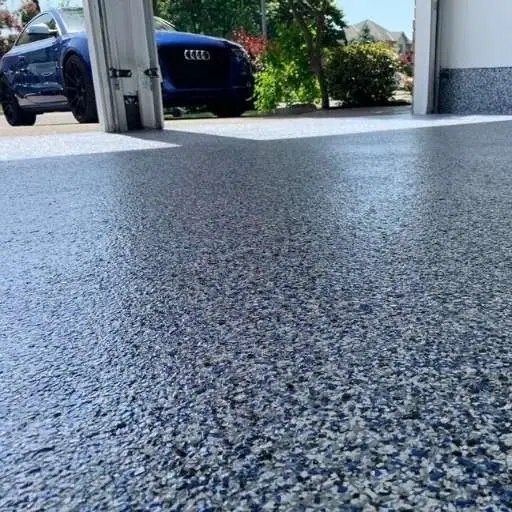
- Decorative flake (chip) system — the most popular garage floor. Vinyl flakes are broadcast into the base coat, which hides dirt, adds texture for grip, and makes the floor more forgiving of wear.
- Metallic epoxy — a high-gloss, marble-like showroom finish. More labor and skill, higher price.
See our comparison of flake vs. metallic vs. solid epoxy for help choosing.
3. The topcoat
The topcoat is what your tires actually touch. A polyaspartic or polyurethane topcoat costs more than a second coat of epoxy but adds UV stability (no yellowing), better scratch resistance and better resistance to road salt and chemicals. In Illinois, it’s usually money well spent — see epoxy vs. polyaspartic.
4. Moisture
If the slab has a moisture problem, a moisture-mitigating primer may be needed. It adds cost, but coating over a damp slab is the fastest way to get bubbling and peeling.
5. Size, layout and access
Bigger garages cost less per square foot because setup and equipment costs are spread out. Steps, drains, floor transitions and lots of stored items to move can add time.
What a quality quote should include
When you compare quotes, make sure each one spells out:
- Prep method — diamond grinding (good) vs. acid etching only (not good enough for a long-lasting floor).
- Crack and spall repair — included, or extra?
- System build — base coat, flake or color, and topcoat, with the product type for each.
- Topcoat type — epoxy, polyurethane or polyaspartic.
- Cure and return-to-service time — when you can walk on it and when you can park on it.
- Cleanup and warranty terms in writing.
Is DIY cheaper?
A big-box epoxy kit costs a few hundred dollars, so on paper it’s much cheaper. In practice, most DIY failures come from the parts of the job a kit can’t do: grinding the slab, filling damage properly, and building enough thickness to resist hot tire pickup. If a DIY floor peels and has to be ground off, the redo costs more than doing it right the first time. We cover this in detail in DIY epoxy kits vs. professional installation.
How long will the floor last?
A professionally installed epoxy garage floor typically lasts 10–20 years or more, depending on traffic, prep quality and the topcoat. Spread over that lifespan, a $3,000 floor works out to a few hundred dollars a year for a surface that resists salt, oil and stains and makes the whole garage look new. Read more in how long epoxy flooring lasts.
Get an exact price for your garage
Every slab is different, so the only way to get a real number is an on-site look. DuraCore Industrial installs residential epoxy floors for garages, basements and patios throughout Chicagoland, and we’ll give you a clear, written quote that spells out exactly what’s included.
Frequently Asked Questions
How much does it cost to epoxy a 2-car garage in Chicago?
Most professionally installed epoxy floors for a standard 2-car garage (roughly 400–500 sq ft) land between about $1,800 and $4,500 in the Chicago area. Simple solid-color systems sit at the low end; full-broadcast flake with a polyaspartic topcoat, heavy crack repair or moisture mitigation push it higher.
What is the price per square foot for garage floor epoxy?
Professional garage floor coatings typically run about $4 to $9 per square foot including grinding, repairs and topcoat. Decorative metallic systems can reach $10–$15 per square foot.
Is epoxy flooring worth the money?
For most homeowners, yes. A professionally installed system protects the slab from road salt and oil, cleans in minutes, and typically lasts 10–20 years — far longer than paint or a DIY kit.
Why are some epoxy quotes so much cheaper than others?
Low quotes usually skip mechanical grinding, use thin low-solids material, or leave off the topcoat. Ask every contractor how they prep the concrete, how thick the system is, and what topcoat they use.