Quick answer
Choose flake for garages and workshops (most durable and best at hiding dirt), metallic for a high-gloss showroom look in basements, offices and retail, and solid color for warehouses, utility spaces and the lowest cost. Prep and topcoat matter more than the finish for how long it lasts.
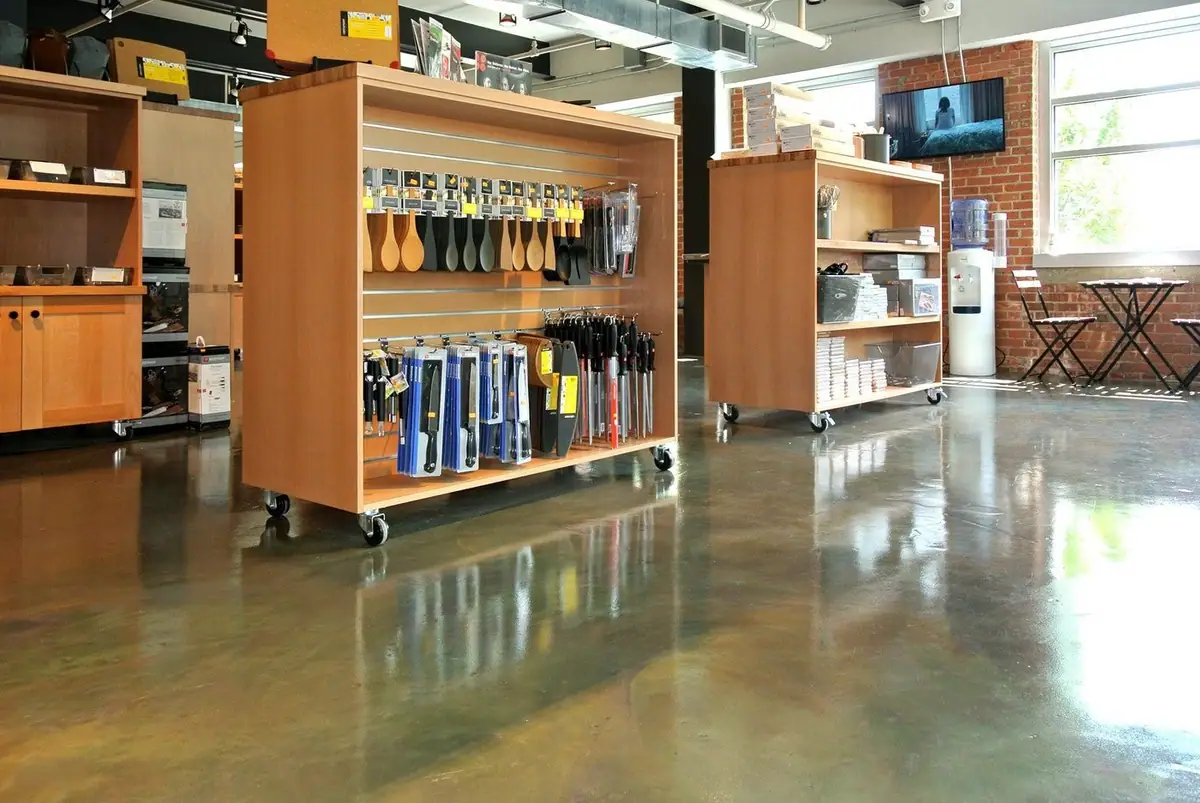
Once you’ve decided on epoxy, the fun part starts: choosing the look. Most residential and commercial floors fall into three families — decorative flake, metallic, and solid color. Each has a different personality, price point and best use.
Decorative flake (chip) epoxy
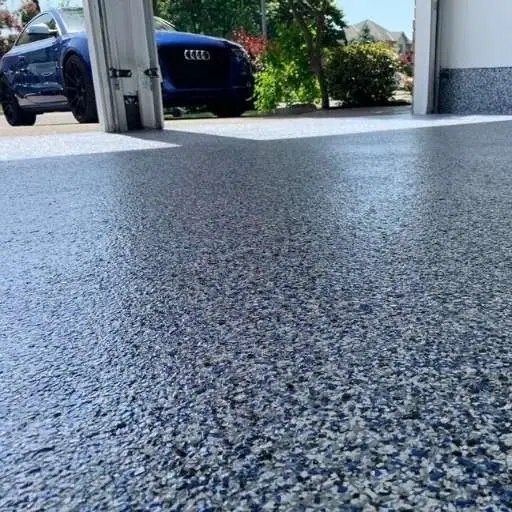
Vinyl flakes are broadcast into the wet base coat — usually to full coverage — then sealed under a clear topcoat.
- Look: speckled, granite-like texture in endless color blends.
- Best for: garages, basements, workshops, laundry rooms, commercial bathrooms and locker rooms.
- Strengths: hides dirt and wear; adds texture for grip; very forgiving of slab imperfections; excellent durability under tires.
- Trade-offs: less “sleek” than metallic.
Flake is the most popular garage floor for good reason — in a Chicagoland garage with slush and salt, it’s the most practical choice.
Metallic epoxy
Metallic pigments are worked into the epoxy and manipulated as it levels, creating movement, depth and a marble or liquid-metal effect.
- Look: high-gloss, three-dimensional, one-of-a-kind.
- Best for: finished basements, showrooms, retail, offices, home gyms and statement garages.
- Strengths: dramatic, luxurious appearance; seamless; no two floors alike.
- Trade-offs: shows scratches and dust more than flake; smoother (add anti-slip for wet areas); more labor and artistry, so it costs more.
For high-end residential interiors, see our high-rise condo resin flooring, which uses architectural resin systems inspired by marble, stone and polished concrete.
Solid color epoxy
A uniform color, often with a clear topcoat.
- Look: clean, modern, industrial.
- Best for: warehouses, manufacturing, utility rooms, and anywhere safety striping or color-coded zones are needed.
- Strengths: most affordable; bright and light-reflective; easy to add lines and markings.
- Trade-offs: shows dust, tire marks and scratches more than flake.
Comparison
| Flake | Metallic | Solid color | |
|---|---|---|---|
| Hides dirt & wear | Best | Fair | Fair |
| Slip resistance | Good (textured) | Lower unless additive used | Good with additive |
| Durability in garages | Excellent | Good | Good |
| Visual impact | Moderate | Highest | Clean / utilitarian |
| Relative cost | $$ | $$$ | $ |
How to choose
- Busy family garage or workshop? Flake.
- Finished basement, showroom or entertaining space? Metallic.
- Warehouse, plant or budget-focused utility space? Solid color with safety markings.
Whatever you choose, the prep and topcoat matter more than the look for how long the floor lasts — read how long epoxy flooring lasts and compare costs in our garage floor cost guide.
Want to see finished floors? Browse our project gallery, then request a free quote.
Frequently Asked Questions
What is the most durable type of epoxy floor?
For garages and high-traffic spaces, a full-broadcast flake system with a clear polyaspartic or urethane topcoat is usually the most durable and forgiving. The flakes add thickness and texture and hide minor wear.
Are metallic epoxy floors slippery?
Metallic floors are smooth and glossy, so they can be slippery when wet. A fine anti-slip additive in the topcoat helps, and metallics are best suited to interior spaces like basements, showrooms and offices.
Which epoxy floor hides dirt best?
Flake floors hide dust, dirt and small debris the best because the multi-color pattern breaks up the surface. Dark solid colors show the most dust.
Can I choose custom colors?
Yes. Flake blends, solid colors and metallic pigments come in a wide range of colors and can be customized to match your space.