Quick answer
Road salt damages garage floors because brine soaks into porous concrete and freeze-thaw cycles break the surface apart, causing pitting and spalling. Damaged slabs can usually be ground, repaired and coated rather than replaced; a coating with a chemical-resistant topcoat keeps salt from soaking in.
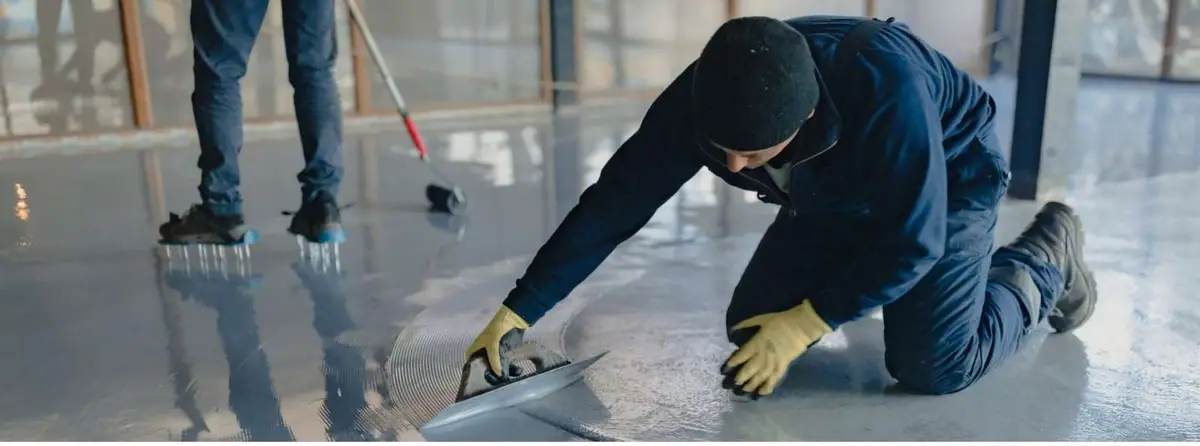
Every Chicagoland winter, cars track in snow, slush and road salt brine. It drips off the wheel wells and sits on the garage floor for weeks. Then one spring you notice the concrete near the door is pitted, flaking and rough. That’s salt damage — and it’s one of the most common garage floor problems in Illinois.
How road salt damages concrete
Concrete looks solid, but it’s porous. Here’s the cycle:
- Salty meltwater soaks in. Brine penetrates the surface pores.
- Freeze-thaw cycles. When the garage drops below freezing, water inside the concrete expands. Illinois winters swing above and below freezing many times a season.
- Pressure builds near the surface. Repeated expansion breaks the top layer apart.
- Scaling and spalling. The surface flakes off, exposing aggregate and leaving pits that hold even more water next winter.
Salt also leaves white efflorescence stains and can accelerate deterioration over time. The damage is usually worst under where you park and right inside the garage door.
Signs your floor is already damaged
- Rough, sandpaper-like patches where cars park
- Small craters or exposed stones (“popouts”)
- Flaking or scaling surface layers
- White crusty residue that comes back after cleaning
- Old paint or sealer peeling in the same areas
Repair: you rarely need a new slab
As long as the concrete is structurally sound, salt-damaged floors can usually be resurfaced rather than replaced:
- Diamond grinding removes the weak, salt-contaminated surface.
- Pits, spalls and cracks are filled with repair mortar or epoxy and ground flush.
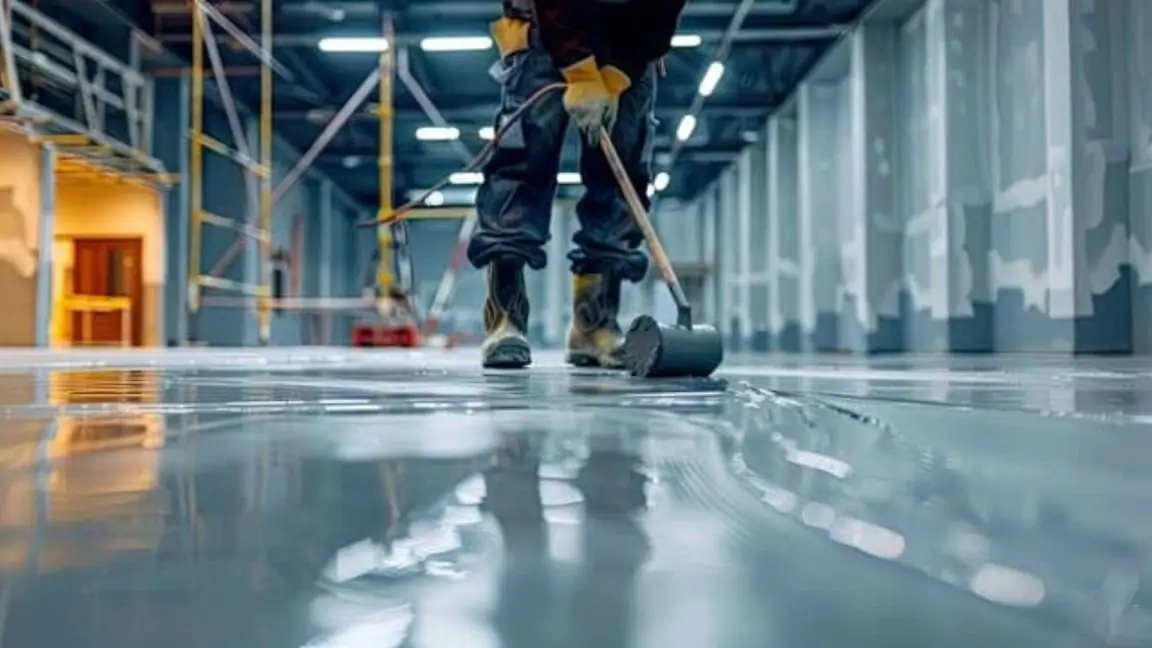
- A coating system is applied over the repaired, level slab.
Protection: seal the concrete
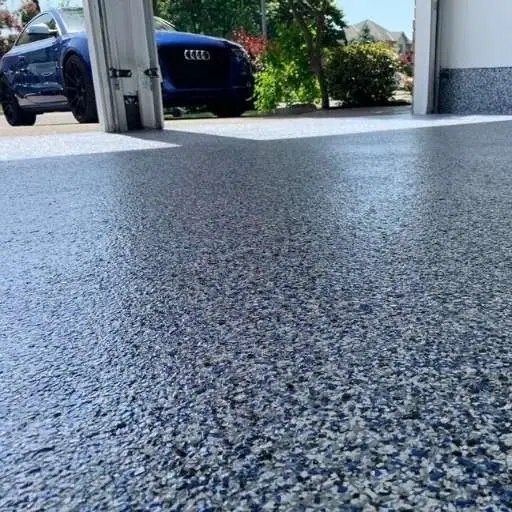
The long-term fix is to stop brine from getting into the concrete at all. A coated floor puts a sealed, non-porous layer between the salt and the slab.
For Chicagoland garages, the most effective setup is a multi-coat system with a chemical-resistant topcoat — commonly an epoxy base with decorative flake and a polyaspartic clear coat, which holds up exceptionally well to salt and stays clear in sunlight. Compare the options in epoxy vs. polyaspartic.
Winter care tips (coated or not)
- Rinse or squeegee out brine every week or two during heavy salt periods.
- Use garage containment mats under each car to catch snowmelt.
- Mop with a neutral cleaner to remove the salt film from coated floors.
- Keep the floor drain clear so meltwater exits instead of pooling.
- Avoid de-icing the garage floor with rock salt — use sand for traction if needed.
Can you coat a garage floor in winter?
Sometimes — but it depends on the products and the slab. Polyaspartic coatings cure at much lower temperatures than standard epoxy, which helps, but the concrete still needs to be dry and above the dew point. Most homeowners schedule installs from spring through fall, and late summer or early fall is a popular time to get protected before the first snow.
Protect your floor before next winter
DuraCore Industrial repairs and coats garage floors throughout Chicagoland, from city garages to the western and northwest suburbs. Get a sense of pricing in our garage floor cost guide, then request a free quote.
Frequently Asked Questions
Does road salt damage concrete garage floors?
Yes. Salty meltwater soaks into porous concrete, and repeated freezing and thawing expands that water inside the slab, causing pitting, scaling and flaking — usually worst where cars park and drip.
What is the best way to protect a garage floor from salt?
A professionally installed coating system with a chemical-resistant topcoat seals the concrete so brine sits on the surface instead of soaking in. In the meantime, rinse salt off regularly and use containment mats.
Can a salt-damaged garage floor be repaired without replacing it?
Usually. Pitted and spalled areas can be ground, filled with repair mortar or epoxy, and coated, which costs far less than pouring a new slab — as long as the concrete is structurally sound.
Can a garage floor be coated in winter?
Sometimes. Fast-curing polyaspartic coatings can be applied at lower temperatures than standard epoxy, but the slab must be dry and warm enough relative to the dew point. Many homeowners schedule installs in spring through fall.