Quick answer
Yes — epoxy is an excellent basement floor if the slab is tested for moisture first and the primer is matched to the result (standard, moisture-tolerant or vapor-barrier). It creates a seamless, water-resistant, easy-to-clean surface, but it will not stop active leaks through walls or cracks.
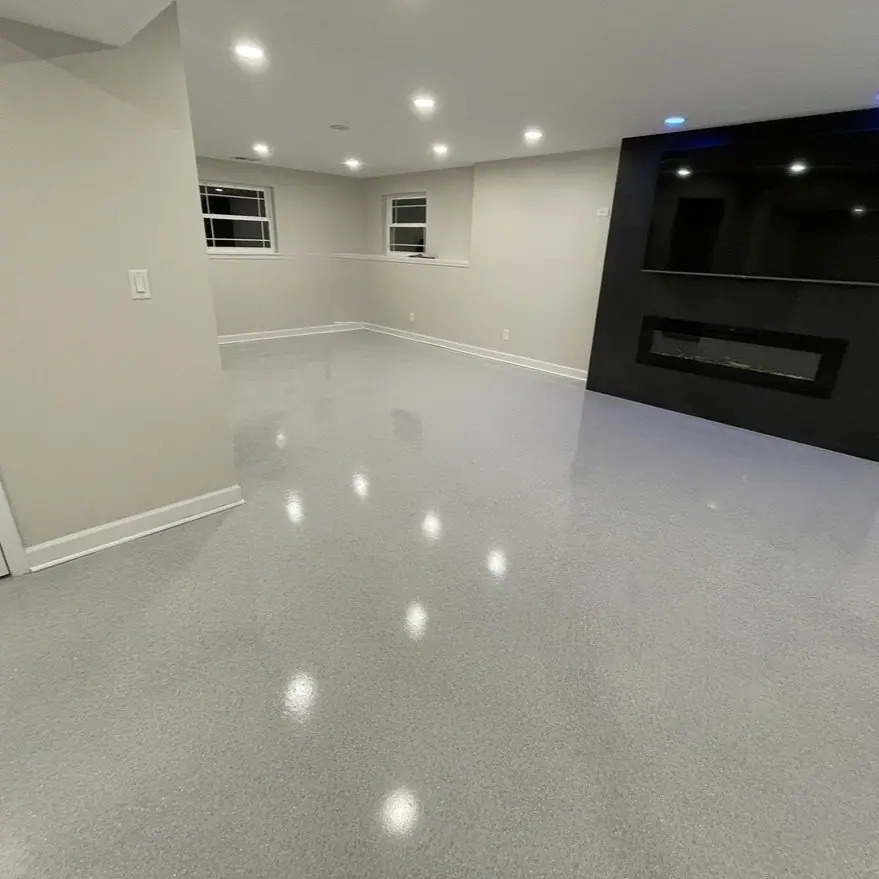
Basements in Chicagoland work hard. They flood after spring storms, sweat in humid Augusts, and host everything from laundry and storage to home gyms and family rooms. That’s exactly why so many homeowners ask: can you epoxy a basement floor?
You can — and it’s one of the most durable, low-maintenance basement floors available — as long as moisture is handled properly.
Why epoxy works well in basements
- Seamless and water-resistant. No grout lines or seams for water and dirt to collect in.
- Won’t rot, warp or mildew. Unlike carpet or some laminates, there’s nothing organic to grow mold.
- Easy to clean. Sweep and mop; spills wipe right up.
- Brightens the space. Light colors and gloss reflect light in rooms with small windows.
- Customizable. Solid colors, decorative flake, or metallic finishes for finished living spaces — see flake vs. metallic vs. solid.
The one thing you can’t skip: moisture testing
Concrete is porous. In a basement, moisture vapor can migrate up through the slab from the soil below — and many older Chicago-area homes were built without a vapor barrier under the slab. If a standard coating traps that vapor, pressure builds until the coating blisters and peels.
That’s why a professional basement install always starts with testing the slab, using methods such as calcium chloride tests or in-slab relative humidity probes. The results determine the system:
| Slab moisture | Typical approach |
|---|---|
| Low | Standard epoxy primer and system |
| Moderate | Moisture-tolerant epoxy primer |
| High | Dedicated moisture-vapor barrier primer before coating |
| Active water / seepage | Fix the water source first — don’t coat yet |
Quick DIY check: Tape a 2×2-foot square of clear plastic sheet tightly to the floor and leave it for 24–48 hours. Darkened concrete or droplets under the plastic mean moisture is coming through. It’s not a substitute for proper testing, but it’s a useful early warning.
What epoxy won’t fix
A floor coating handles vapor through the slab, but it won’t stop liquid water coming in through foundation cracks, window wells, a failed sump pump, or the joint where the wall meets the floor. If you see water after heavy rain, deal with drainage and waterproofing first, then coat.
The basement install process
- Inspection and moisture testing.
- Diamond grinding to remove old paint, adhesive and sealers and open the concrete.
- Crack and pit repair, ground flush.
- Primer matched to the moisture test results.
- Body coat in your color, with optional flake or metallic effects.
- Topcoat for scratch resistance and optional slip resistance.
Most basement projects take 1–2 days depending on size and repairs, plus cure time before moving furniture back.
Pros and cons at a glance
Pros: durable, water-resistant, easy to clean, mold-resistant, bright, long-lasting (often 15–20+ years in a basement because there are no hot tires or road salt).
Cons: requires proper moisture testing and prep; feels hard underfoot (rugs help); won’t solve active leaks; not a DIY-friendly job on a damp slab.
Ready to finish your basement floor?
DuraCore Industrial installs residential epoxy floors for basements, garages and patios across Chicagoland, and every basement starts with a moisture assessment so the floor stays bonded for the long haul. Curious about pricing? Our cost guide applies to basements too.
Frequently Asked Questions
Is epoxy good for basement floors?
Yes — when the slab is tested for moisture first and the right primer is used. Epoxy creates a seamless, easy-to-clean, water-resistant surface that won’t rot, warp or grow mold the way carpet and some wood products can.
Will epoxy stop water from coming into my basement?
No. A floor coating manages moisture vapor through the slab, but it will not fix active leaks through walls, cracks, window wells or the cove joint. Those need to be addressed first.
How much does an epoxy basement floor cost?
Basement epoxy is priced similarly to garage floors, commonly about $4–$9 per square foot installed, with moisture-mitigation primers and extensive crack repair adding to the total.
Is an epoxy basement floor cold or slippery?
Epoxy feels like any hard floor; area rugs work well in living spaces. Slip resistance can be added with a textured additive or a decorative flake broadcast, which is a good idea near laundry areas and stairs.